

I was scrolling LinkedIn yesterday and saw four posts in a row start with some variation of: "In today's fast-paced digital landscape..."
I physically cringed.
Then, three posts down, I saw a tweet screenshot from a founder. It was entirely lowercase, had a glaring missing comma, and ended with, "im just so tired of building features nobody wants."
It saw many comments and posts from people sharing their own product failures. It stopped my scroll dead because it felt like a real person just exhaled onto my timeline.
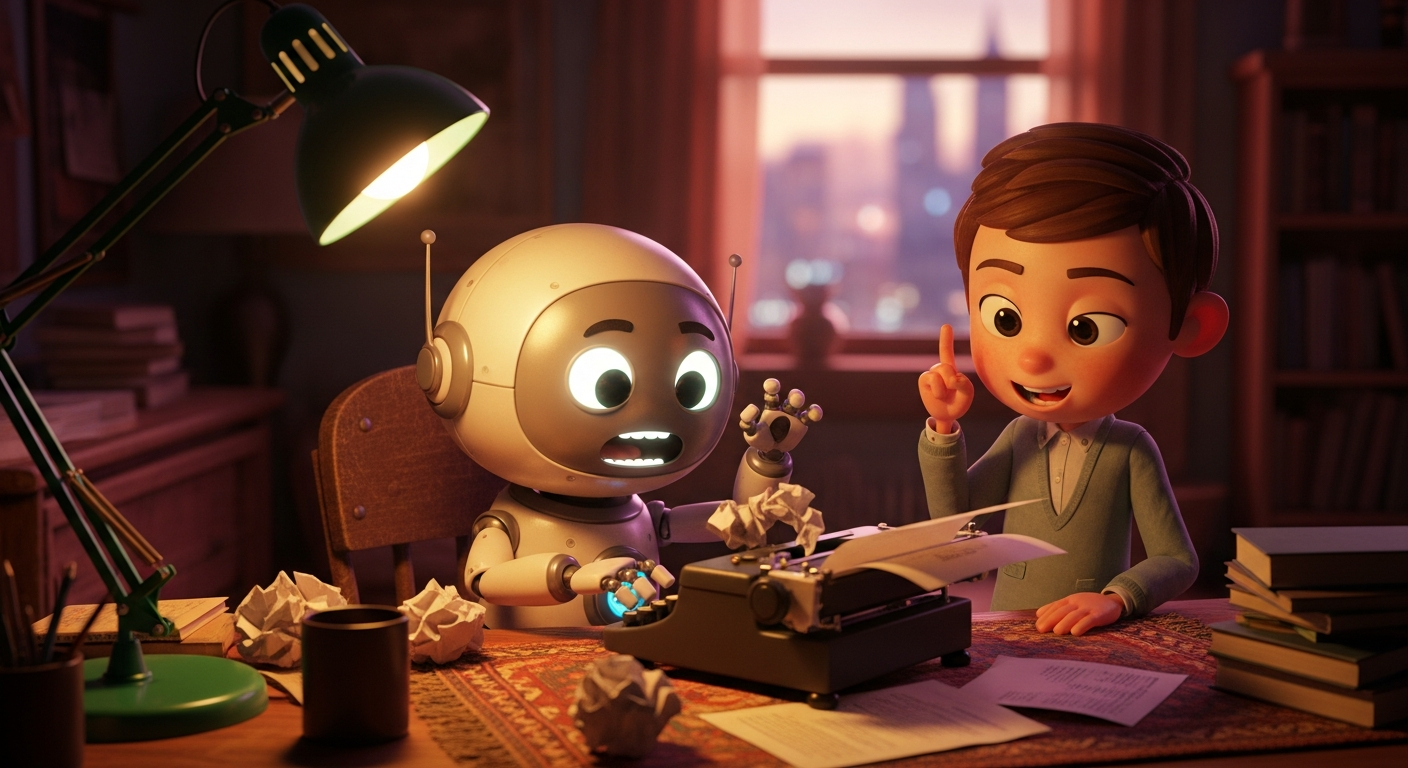
We spent the last decade using tools like Grammarly to polish our writing until we sounded like robots. Now, the robots write perfectly, and we are desperately trying to figure out how to sound human again.
The economics of "perfect" content
Here is the brutal truth about the creator economy right now: the cost of creating a "good" piece of content has dropped to absolute zero.
Need a 1,000-word SEO blog post? Ten seconds. Need thirty Instagram captions with optimized hashtags? Five seconds. Need a thread about B2B SaaS growth hacks? Done before you finish your coffee.
But basic economics tells us that when the supply of something becomes infinite, its value drops to zero.
When perfectly structured, grammatically flawless content is free, your flaws, your weirdness, and your typos become your premium product.
AI can write your captions, suggest your hooks, and format your newsletters. But you know what it can't do? Feel. It doesn't know what it's like to sweat through a pitch meeting or debug a server error at 3 AM. The internet is drowning in soulless AI filler, which means raw, unpolished human emotion commands a massive premium.
🤖 The "Too Perfect" Detector
I actually got so paranoid about my own writing sounding like an LLM that I built a tripwire into my content workflow.
Before a draft goes from my Notion database to my CMS, it passes through an n8n webhook. It scans my text for what I call "ChatGPT-isms"—those dead-giveaway words that AI loves to use. If my writing scores too high, the automation flags it and tells me to rewrite it.
Here is the exact JavaScript snippet running in my n8n Code node:
// Runs in an n8n Code Node to scan draft text for AI-isms before publishing
const text = $input.item.json.draftText.toLowerCase();
const aiWords = [
  "delve", "tapestry", "testament", "unlock",
  "elevate", "fast-paced", "landscape", "beacon",
  "bustling", "game-changer"
];

let robotScore = 0;
let flaggedWords = [];

aiWords.forEach(word => {
  if (text.includes(word)) {
    robotScore++;
    flaggedWords.push(word);
  }
});

return {
  json: {
    isTooPerfect: robotScore > 2,
    score: robotScore,
    offendingWords: flaggedWords,
    advice: robotScore > 2 ? "Rewrite this. You sound like a toaster." : "Send it."
  }
};
Watch out for case sensitivity if you implement something like this—forcing the draft text to lowercase first prevents a capitalized "Delve" from slipping past the filter. I keep the threshold at > 2 because occasionally, you actually do need to use the word "unlock" without being a robot, but if you hit three of these in one post, you're definitely hallucinating.
How to build your human moat
If you want to survive the AI content flood, you have to stop competing on polish and start competing on humanity. Here is how you do it.
1. Leave the typo in
I'm not saying you should intentionally misspell words to game the algorithm. That's just fake hype. But stop obsessing over the perfect sentence structure. If you write a raw, passionate take in the Notes app and realize later you used the wrong "their," leave it. It proves there's blood pumping through the veins of the person behind the keyboard.
2. Specificity is un-promptable
AI speaks in averages. If you ask it to write a story about a hard day at work, it will give you a generic tale about "overcoming obstacles" and "synergizing with the team."
Humans speak in specifics. Don't say "building a startup is hard." Say, "I spent three hours staring at a CORS error yesterday while my lukewarm coffee separated into two distinct layers of sadness." AI doesn't know what lukewarm coffee looks like. Lean into the hyper-specific details of your life.
3. Have a jagged edge
Language models are heavily RLHF'd (Reinforcement Learning from Human Feedback) to be safe, neutral, and helpful. They are lobotomized to ensure they never offend anyone.
If your brand has no strong opinions, you are competing directly with ChatGPT. You need to take a stance. Tell us what you hate. Tell us what everyone in your industry is doing wrong. If your writing doesn't occasionally polarize your audience, you are playing it too safe.
The Challenge
We are entering an era where "unpolished" is the new luxury. People don't want to read a textbook; they want to read you.
So here is my challenge for your next piece of content: Write it in one sitting. Don't run it through Grammarly. Don't ask Claude to "punch it up." Don't ask ChatGPT to "optimize it for engagement."
Write it, find the typo, smile at it, and hit publish.