

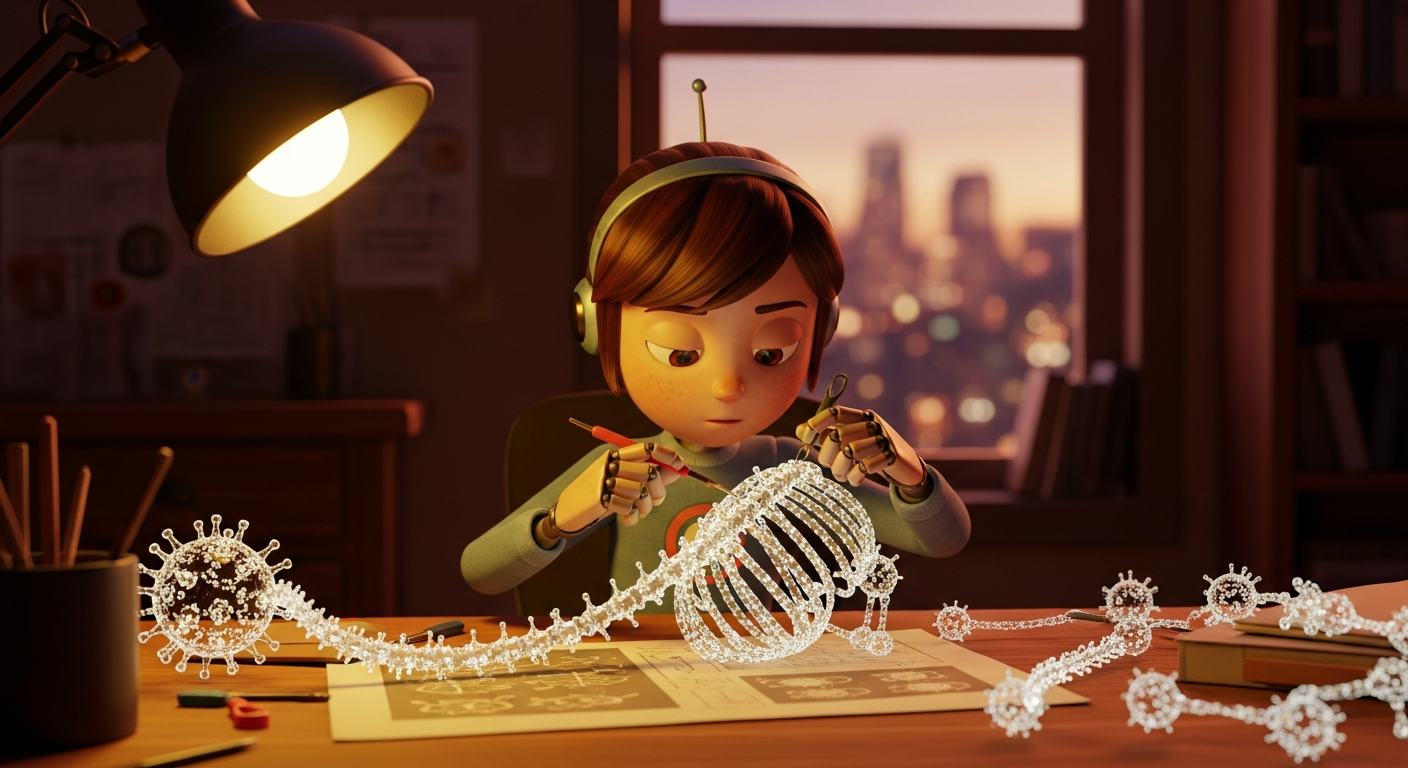
I was deep in a Reddit growth marketing thread last Tuesday when I noticed a weird phrase keep popping up: "extracting the skeleton."
People weren't talking about Halloween. They were talking about a quiet, slightly underground tactic to guarantee a post's visual performance.
For years, when a piece of content went viral, we tried to dissect the copy. We looked at the hook, the pacing, the controversial opinion. But we usually just guessed at the visuals. "Oh, it's a nice photo," we’d say, before going back to Canva to slap some text on a stock image.
That era of guessing is over.
A new wave of creators and growth hackers are using AI tools like Truepixai for something entirely different. They aren't using AI to generate fake, six-fingered images. They are using it to reverse-engineer the exact visual DNA of high-performing competitor posts.
They are extracting the "virality skeleton."
How the Skeleton Extraction Works
Let’s say you notice a competitor’s Instagram post absolutely exploding. It’s a photo of them at their desk, but there’s something about it that just works. It stops the scroll.
Instead of trying to manually recreate that vibe, these creators feed the viral image into an AI tool. The software strips away the subject and analyzes the underlying visual math.
It maps the lighting setup. It identifies the exact color grading and hex codes. It calculates the depth of field, the framing ratio, and the contrast balance between the subject and the background.
It hands you back a blueprint. A skeleton.
Then, you take a completely normal, flat photo of yourself or your product, and use the AI to apply that exact same lighting, framing, and color grading to your asset.
You aren't stealing their content. You are ethically stealing their aesthetic physics.
Why This Matters for Your Personal Brand
If you're a founder or creator, you already know the internet is a crowded room. Getting someone to stop scrolling takes a fraction of a second.
That split-second decision isn't driven by your brilliant copywriting. It's driven by subconscious visual cues.
If a specific moody blue background with harsh neon rim lighting is currently dominating the tech niche, you don't need to reinvent the wheel. You just need to map your brand onto that winning visual framework.
We’ve seen this happen manually for years. Think about the Alex Hormozi bold-text captions or the Ali Abdaal warm-desk-lamp YouTube aesthetic. People copied those styles because they worked.
But now, AI is turning that manual imitation into an exact science.
The Playbook: How to Use Virality Skeletons
Here is what this shift means for how we create content moving forward:
1. AI is becoming a diagnostic tool, not just a generator. We've spent the last two years obsessing over prompt engineering to create new things. The smartest marketers are pivoting. They are using AI to analyze existing successful things. Diagnostics will soon be more valuable than generation.
2. The new mood board is mathematical. You don't need a Pinterest board of "vibes" anymore. You need a folder of high-performing competitor posts. When you want to launch a new campaign, you extract the skeletons from the top three posts in your niche this month and apply them to your assets. It’s data-driven art direction.
3. Visual consistency beats fancy gear. You don't need a $5,000 camera and a studio lighting setup. You just need a decent base photo and the right skeleton. This levels the playing field for solo founders who can't afford a creative agency but still need their brand to look expensive and native to the platform.
4. Format conformity is a feature, not a bug. A lot of creators worry that if they use the same visual style as everyone else, they’ll blend in. The opposite is true. On platforms like Instagram and LinkedIn, looking native to the platform builds trust. You want your ideas to stand out, but you want your packaging to feel familiar and professional.
Stop Staring at a Blank Canvas
The days of guessing what looks good are behind us. The internet is constantly giving us real-time feedback on what captures human attention.
Austin Kleon famously wrote a book called Steal Like an Artist. This is the modern, algorithmic version of that exact ethos.
Don't steal people's words. Don't steal their ideas. But absolutely steal the exact hex code of their background lighting if it gets a 10% higher click-through rate.
Stop trying to invent a new aesthetic from scratch. Find what's already working, extract the skeleton, and build your own monster.
Whose skeleton are you going to steal today?